

There’s a moment in Lecce when the city feels suspended. The first light softens the surface of the Lecce stone, the traffic is just a distant murmur, and the air carries the scent of freshly ground coffee drifting from the bars around Piazza Sant’Oronzo.
It’s the perfect time to begin a route that blends art with tranquillity, guiding travellers between imposing walls and hidden cloisters where time seems to slow down.
Castello Carlo V: a giant that tells the city’s story
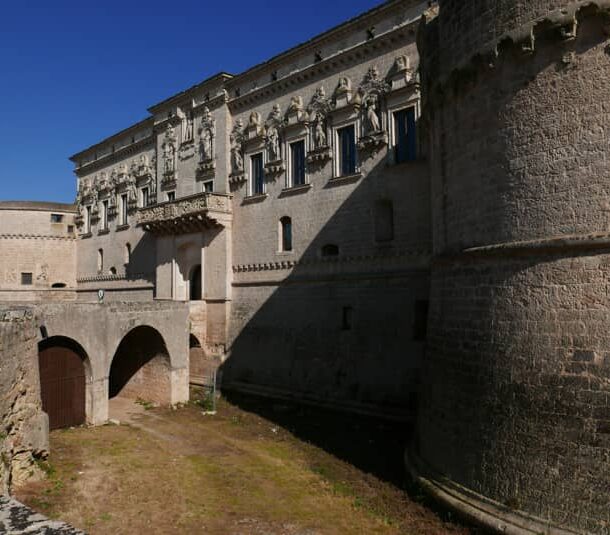
From afar, Castello Carlo V appears as a compact, severe fortress. But as you approach, its details soften the structure: the warm shades of the stone, the narrow slits, the gentle curve of the outer walls tracing the ancient moat.
Inside, dimly lit rooms echo softly, ideal for wandering through temporary exhibitions and displays dedicated to local history. Each step feels cool and almost enveloping, in contrast with the bright streets waiting outside.
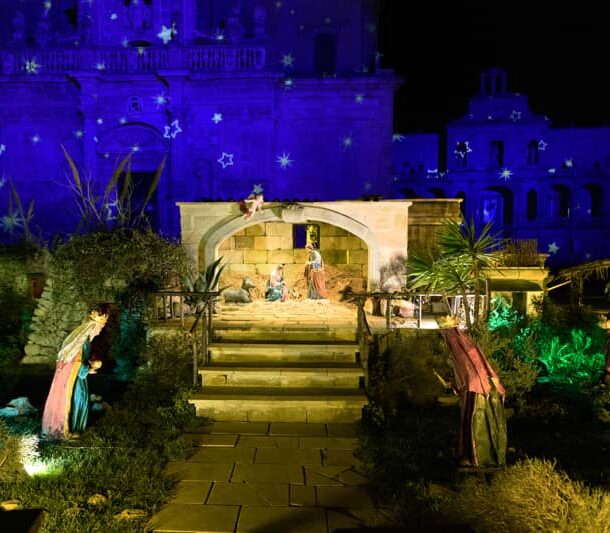
Stepping out of the castle means returning to the city’s lively heart. Just a few meters away, artisans of papier-mâché shape figures with quick hands, while small workshops display nativity scenes and earthy-toned creations.
Toward the hidden cloisters: Lecce made of quiet surprises
Walking along Via Libertini, the atmosphere shifts. Voices soften, façades narrow, and open shutters reveal everyday life unfolding at a slow, steady pace.
This is where the cloisters begin to appear—secret courtyards invisible from the street, revealed only by crossing an old wooden doorway.
The Domenican Cloister, with its elegant portico and neatly kept garden, radiates instant calm. The arches draw perfect patterns in the morning light, while a few students cross the space softly.
A little further on, the Seminary Cloister invites you to pause. Its central well, the stone pavement polished by time, and the scent of fresh lime evoke a deep sense of peace, as if you’ve stepped onto an island of silence within the city.
What to see along the way: small details worth noticing
A walk between the castle and the cloisters uncovers smaller, often overlooked places full of character. Among them is the little Church of Santa Maria di Costantinopoli, usually unnoticed but with a surprisingly fine façade, and nearby Via Palmieri, where sunlight filters through wrought-iron balconies and carved stone portals.
Along the way, you’ll pass workshops displaying Lecce stone sculptures, cafés where warm pasticciotti come out of the oven, and tiny shops where the scent of spices mingles with the aged wood of the furniture displayed inside.
A path to experience slowly
Exploring Lecce on foot invites you to notice details that often go unseen: carvings beneath windows, an artisan greeting neighbours, the echo of the cathedral’s bells drifting unexpectedly from behind the rooftops.
The route from Castello Carlo V to the cloisters is one of the richest in nuance, showing the city through its layered history and its most authentic quiet corners.
Just a few minutes from Eos Hotel, you can experience each step of this route—guided by the light, scents and unexpected moments that Lecce reveals to curious travellers.